
 Steel-cut, rolled, pinhead, fine, medium, coarse: a plain-English guide to choosing the right oats for your baking.
A Beginner's Guide to the Bakestone: Cooking Oatcakes Without a Griddle
Every traditional oatcake recipe seems to assume you own a griddle. Recipes from old British cookbooks cheerfully instruct you to 'heat the bakestone' as though everyone has one hanging in the pantry. The good news is that you almost certainly have something in your kitchen that will do the job just as well, and possibly better. A bakestone is simply a flat, heavy cooking surface — traditionally a slab of slate or cast iron set over a fire. Any modern equivalent that holds heat evenly will work.
What matters most is not the name of the pan but how it behaves. Oatcakes need steady, moderate heat and a surface that will not scorch them before the middle is cooked. Thin Derbyshire-style oatcakes are forgiving; soft yeasted Staffordshire oatcakes need a slightly gentler touch. Once you understand your pan, the rest is practice.
Choosing Your Cooking Surface
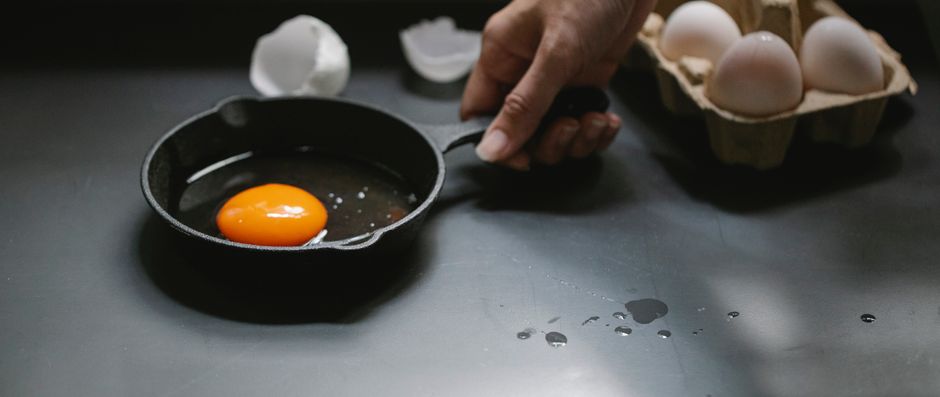
A cast iron skillet or griddle is the closest thing to a traditional bakestone and the best starting point. It takes a few minutes to heat through, but once it is ready it holds temperature beautifully and gives oatcakes that faintly speckled, toasted finish. A heavy-bottomed non-stick frying pan is a perfectly good substitute and a little more forgiving for beginners, though it will not brown the cakes quite as deeply.
If you have a flat electric griddle or a crepe pan, those work well too, particularly for the larger Staffordshire oatcakes. What you want to avoid is anything thin or flimsy — a cheap aluminium pan will develop hot spots and produce oatcakes that are burnt in one place and pale in another. A well-seasoned comal, the flat Mexican griddle, is also an excellent stand-in and often cheaper than a dedicated bakestone.
One piece of kit worth considering is a flat spatula or a thin metal slice. Oatcakes are delicate, especially the soft ones, and a flexible tool makes turning them far less nerve-wracking than a bulky fish slice.
Getting the Heat Right
Heat is where most first attempts go wrong. Too hot and the outside catches before the inside sets; too cool and the oatcake dries out and turns leathery. The reliable test is to sprinkle a few drops of water on the surface. They should sizzle and dance for a second or two, then disappear. If they evaporate instantly, the pan is too hot. If nothing happens, give it another minute.
For soft Staffordshire oatcakes, aim for medium heat and cook them for roughly a minute a side, until the surface is covered in tiny bubbles and the edges look dry. For crisp Derbyshire oatcakes, use a slightly lower heat and give them longer — three or four minutes a side — so they dry out fully and turn brittle. Resist the urge to keep flipping. One turn is usually enough.
Greasing is another small decision that makes a difference. A thin wipe of neutral oil or a rub of bacon fat keeps the oatcakes from sticking without making them greasy. Too much fat and they fry rather than bake, which changes the texture entirely. A light hand is best.
Finally, do not crowd the pan. Oatcakes need room for steam to escape, and overlapping them will leave you with pale, soggy patches. Cook two or three at a time at most, and keep the finished ones warm in a folded tea towel while you work through the rest of the batter. It is a slow, pleasant way to spend a morning, and once you have the rhythm you will wonder why you ever thought you needed special equipment.